The Intersection of Safety: Why Intelligent Routing Protects Our Communities
Learn how intelligent route planning protects children during National School Bus Safety Week by routing commercial fleets away from active school zones.
– 3 Min Read
National School Bus Safety Week is a critical reminder that street safety is a shared responsibility, especially for operators of heavy commercial vehicles—such as solid waste and recycling trucks—that navigate roads with school buses every day.
Ignoring this responsibility is tragically real. Recent incidents underscore the catastrophic nature of these interactions:
- October 2026, Scott County, Virginia: A juvenile stepping off a school bus was struck and injured by a dump truck that had swerved to avoid the stopped bus.
- September 2026, Fairfax County, Virginia: A tragic collision near McLean High School involving a garbage truck resulted in the driver being charged with careless driving and causing the death of a vulnerable road user (a bicycling student).
- August 2024, Spanish Fork, Utah: A harrowing event where multiple students were rushed to the hospital after a garbage truck collided with a school bus.
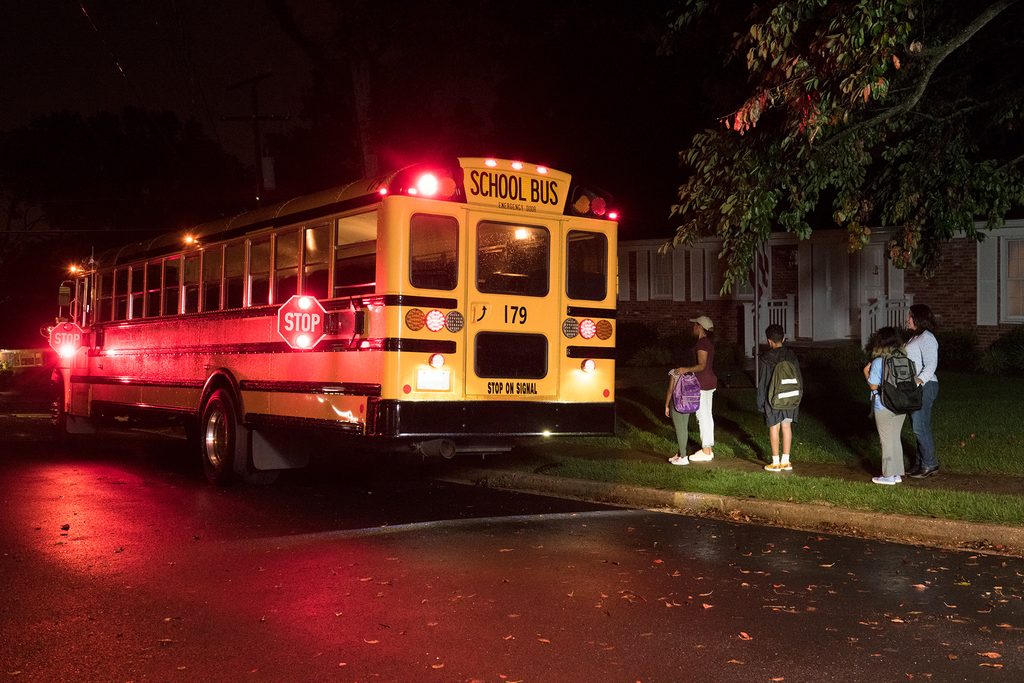
According to National Highway Traffic Safety Administration (NHTSA) data, occupants of other vehicles accounted for 70 percent of fatalities in school-bus-related crashes, while pedestrians made up 15 percent. More than half of those pedestrian fatalities are children aged 5 to 10.
How do we mitigate these risks? Intelligent route planning can play a key role.
See: Tips from the Solid Waste Association of North America
While drivers must remain vigilant, fleet managers can use advanced technology to reduce exposure. Intelligent route planning that prioritizes safety lets organizations design routes that avoid school zones during peak morning and afternoon bell hours.
Restricting heavy fleet operations in these high-risk areas during drop-off and pick-up times dramatically reduces the potential for tragic interactions. It also helps drivers bypass severe congestion and slower travel speeds.
Safety is not an accident; it is the result of deliberate, intelligent planning. Let’s commit to leveraging smarter routing strategies to protect our communities’ most vulnerable pedestrians—our children.