
Beyond the Math: Challenging the Traditional Paradigm of Route Optimization
The accident that never happens is worth more than the last percentage of optimality. Why we must design routes for people, not just algorithms.
– 3 Min Read
Traditionally, the quality of a vehicle route is measured by minimum time or distance. In the routing world, we often strive to squeeze out the last tenth of a percent towards theoretical optimality. We celebrate the algorithm’s achievement and computational speed. But we have to ask ourselves what happens if the definition of optimality is not just about minimum time or distance. What if operational feasibility, safety, or simple acceptance by the driver on the street is considered the true evaluation of the solution?
When a routing solution focuses purely on mathematical perfection, it can sometimes ignore the reality on the road. We need to explore the safety considerations that can make or break driver acceptance. This includes practical factors like side-of-street service and the direction of approach. Keeping drivers safe means ensuring pickups occur only on the passenger side of the vehicle, so the operator never has to cross live lanes of traffic. It also requires asking hard questions, such as whether all left turns, or right turns in the UK, are created equal.
RouteSmart President Larry Levy will dive deep into these critical concepts during his upcoming presentation at the 10th Annual Meeting of the EURO Working Group on Vehicle Routing and Logistics Optimization (VeRoLog 2026) in Bath, UK.
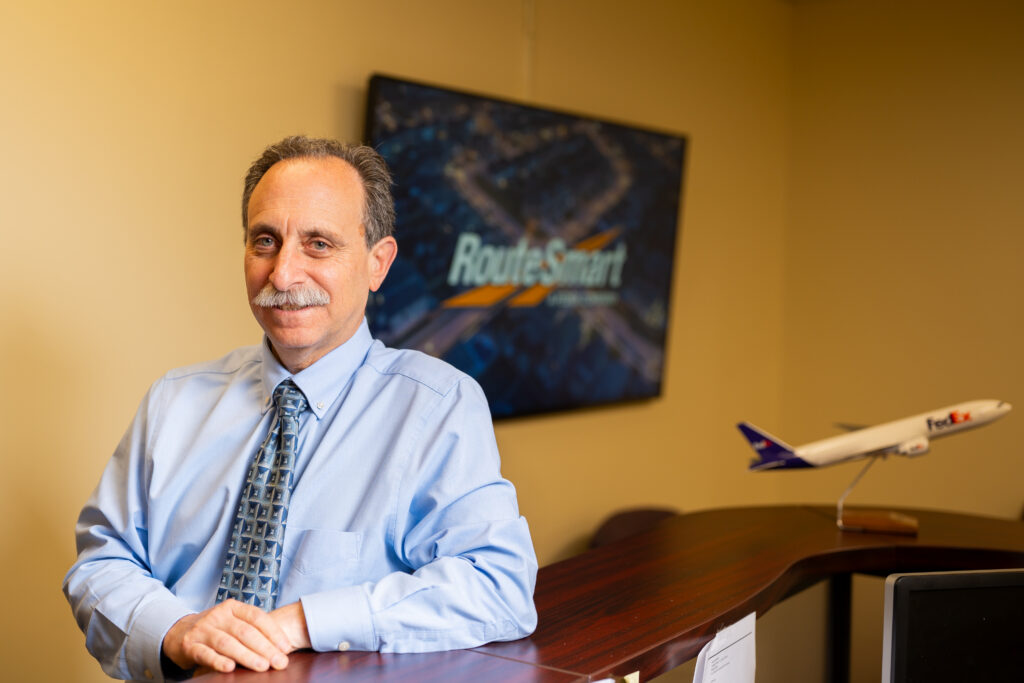
In his presentation, Larry will examine the hidden dangers of the stealth left, or stealth right, depending on where you are driving. This is a situation where an algorithm saves a few seconds or yards on paper but forces a driver into a stressful or hazardous maneuver across oncoming traffic. A route planning solution that is mathematically 100 percent optimal on a screen is zero percent optimal if a driver refuses to use it. If the driver abandons the path and creates their own manual route, all the computational efficiency is lost.
Ultimately, if a solution is not operationally feasible, it will fail. If the driver dismisses the travel path and sequence because the solution is not implementable or safe, they will simply create their own route. When that happens, the perceived optimal solution is immediately replaced with an inferior, human-generated path. The accident that never happens could easily be valued more than the last percentage of optimality. It is time we reimagined the very definition of what makes a route optimal.
Larry is part of a panel presenting on Tuesday, July 7. The session runs from 2:30 p.m. to 4:00 p.m. London Time (BST), and Larry will take the stage for his dedicated slot at 3:15 p.m. BST.
For those attending VeRoLog, make sure to mark your schedules for this insightful discussion that promises to challenge the traditional Operations Research paradigm by reframing optimality around driver safety and acceptance. Learn more about VeRoLog here.